

Direct answer
At a glance
A calculation-led India guide to comparing sale prices, coupon caps, bank discounts, cashback, fees and the effective final cost before paying.
- Article type
- how-to
- Last updated
- 19 July 2026 at 1:22 pm IST
- Sources listed
- 3
Use the lowest verified effective cost
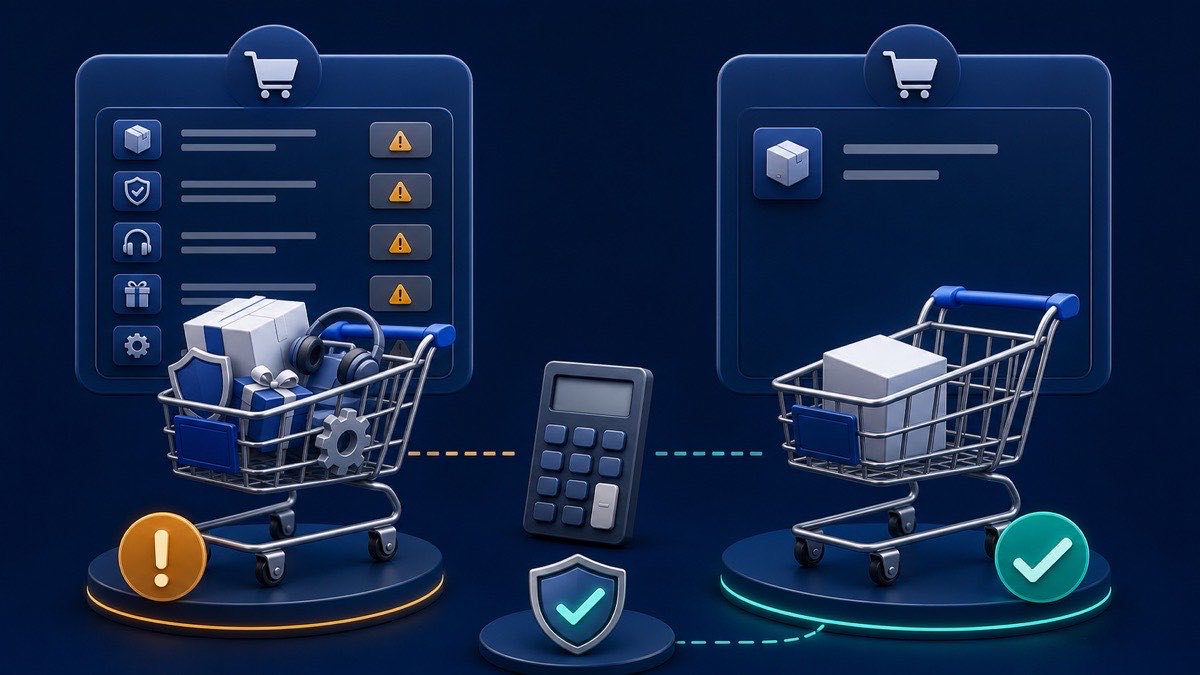
Build the cart you actually need, then compare its effective cost through each eligible offer path. Do not add an unwanted item merely to unlock a coupon or bank minimum. Do not count cashback as money saved today, and do not assume that two eligible-looking offers will combine.
CouponPe's calculation is:
Effective cost = checkout amount + unavoidable payment fees - confirmed later benefit
Use zero for a later benefit when its eligibility, cap, credit destination or timing is unclear. This conservative rule makes the comparison reproducible and prevents a large banner percentage from hiding a higher real spend.
The best offer is the lowest verified cost for the original planned cart, not the greatest number of discount labels.
Separate the five price layers
| Price layer | What it means | Check before counting it |
|---|---|---|
| Reference price | MRP or another crossed-out comparison | Whether you would genuinely have paid it |
| Sale price | Current product or cart price before a code | Same seller, variant, quantity and delivery location |
| Coupon saving | Reduction after a valid code | Minimum spend, exclusions, cap and any automatic offer removed |
| Payment saving | Instant discount or cashback linked to payment | Eligible bank, card type, network, EMI condition, cap and usage limit |
| Effective cost | What the purchase finally costs you | Checkout amount, unavoidable fees and only confirmed later benefits |
India's Consumer Protection (E-Commerce) Rules require e-commerce entities and sellers to disclose specified information including payment methods, returns, refunds and grievance routes. An offer still has its own terms, so the current checkout and linked terms remain the final eligibility test.
Reproduce the calculation on one cart
Assume your planned cart has a sale total of ₹2,400 with no unavoidable delivery fee. Compare four paths without changing the products:
| Path | Calculation | Checkout amount | Later benefit | Effective cost |
|---|---|---|---|---|
| Sale only | ₹2,400 | ₹2,400 | ₹0 | ₹2,400 |
| 15% coupon, capped at ₹250 | ₹2,400 - min(₹360, ₹250) | ₹2,150 | ₹0 | ₹2,150 |
| 10% bank discount, ₹3,000 minimum | Cart misses the minimum | ₹2,400 | ₹0 | ₹2,400 |
| ₹200 cashback later | ₹2,400 now | ₹2,400 | ₹200 if confirmed | ₹2,200 |
The coupon wins at ₹2,150. Adding a ₹600 item only to cross the bank threshold would make the cart ₹3,000 before the discount. Even a full ₹300 discount leaves ₹2,700 spent, which is ₹550 more than the coupon route and includes something you did not plan to buy.
This example is labelled original analysis. It demonstrates the method; it is not a live merchant quote or a promise that a particular coupon and card offer are available.

 CouponPe
Check the order of operations
Offer terms may define the minimum transaction before or after a coupon, exclude delivery or gift-card value, or calculate the percentage on selected products only. Never guess the order. Test the cart and read the terms beside the offer.
For a percentage discount with a cap, calculate both values:
- Percentage saving = eligible amount x discount rate.
- Allowed saving = the lower of the percentage saving and stated cap.
- Checkout amount = eligible cart total - allowed saving + unavoidable fees.
A 10% offer capped at ₹1,000 reaches its cap only when the eligible amount reaches ₹10,000. Below that point, the percentage decides the saving. Above it, the cap stops the saving from increasing.
Also check whether the card offer is once per card, once per account or available for several transactions. Splitting one order can lose a minimum-spend benefit, while combining unrelated purchases can create waste. Use only the structure permitted by the current terms.
Instant discount, cashback and rewards are different
An instant discount reduces the checkout amount immediately. Cashback is normally credited later to a card account, bank account, wallet or another stated destination. Reward points may have a separate redemption value and expiry. Do not subtract all three from today's payable amount as if they were cash in hand.
For cashback, record:
- the eligible payment instrument and card variant;
- minimum eligible transaction and maximum benefit;
- offer period and per-card or per-account limit;
- expected credit date and destination;
- exclusions for EMI, gift cards, selected sellers or categories;
- what happens after cancellation, partial cancellation or return.
A returned item can reduce the eligible transaction value or lead to reversal of a benefit under offer-specific terms. Keep the terms, invoice and refund reference until both the purchase and benefit are settled. CouponPe's return, replacement, refund and warranty guide helps separate a product remedy from a payment-offer dispute.
RBI's current card FAQ also distinguishes refunds received before a bill is paid from refunds received after card dues have already been cleared. If a card purchase is reversed, check how the issuer has adjusted the credit and contact it through the official route when the statement does not match the transaction trail.
Use a six-step checkout method
- Freeze the planned cart. Keep products, seller, variant, quantity and address identical.
- Record the no-code total. Include delivery, platform, handling and convenience fees.
- Test one coupon at a time. Note the actual reduction and any automatic benefit that disappears.
- Read payment terms. Confirm minimum amount, cap, card variant, EMI condition and usage limit.
- Calculate effective cost. Add unavoidable fees and subtract only a confirmed later benefit.
- Save evidence. Retain the offer terms, successful-code message, final total and order invoice.
For EMI-labelled offers, use CouponPe's No Cost EMI real-cost guide to include processing fees, GST on interest or fees, and lost non-EMI discounts. For a checkout that adds an unwanted service or changes the total late, use the dark-pattern checkout reset. For a food-order example where a code-free value section and coupon cannot be stacked, use the Domino's India menu and order comparison.
Compare current offers without letting them choose the cart
Shoppers can review current Amazon coupons and shopping offers, Flipkart coupons and shopping offers, Myntra coupons and fashion offers and AJIO coupons and fashion offers. These pages help discover an offer route; the merchant's product page, cart and payment terms decide actual eligibility.
Test the most relevant code, one credible alternative and the no-code sale total. Opening many codes rarely improves the result when the cart itself is unchanged. If the payment is debited but no order appears, preserve both records and follow the UPI failed-order refund checklist instead of treating it as an offer-calculation problem.
 CouponPe
How this offer comparison was checked
CouponPe rechecked the Department of Consumer Affairs' E-Commerce Rules, RBI's card FAQ and an official Amazon Business offer-terms example on 19 July 2026. The worked cart and effective-cost equation are CouponPe original analysis designed to make comparisons repeatable. They do not represent a live price, bank promotion or first-hand checkout test.
Offer definitions vary. A merchant or bank can specify a different eligible amount, cap, usage limit, credit date, cancellation treatment or combination rule. Always use the terms attached to the offer visible for your account and payment method.
Final verdict
Keep the original planned cart fixed and calculate each path separately. Count an instant discount at checkout, count cashback later only when its terms are confirmed, include unavoidable fees and stop when extra spending is required merely to unlock a headline saving. The lowest verified effective cost is the honest winner.
How this guide was prepared
CouponPe separates editorial explanation from merchant claims, records visible update dates, and lists the supplied sources below. Offer eligibility and final prices should always be confirmed on the merchant website or app.