

Direct answer
At a glance
A practical India-focused guide to checking, refusing, documenting and reporting an unsolicited cash-on-delivery parcel.
- Article type
- how-to
- Last updated
- 21 July 2026 at 11:53 am IST
- Sources listed
- 5
Do not pay until the parcel matches an order
If a cash-on-delivery parcel arrives and nobody at home recognises the order, pause before paying. Ask the delivery person for time to verify it. Check every household member's order history using the merchant's official app or website, not a link sent by an unknown caller. Match the order number, product, amount, recipient and delivery address.
When no genuine order matches, refuse the parcel. You do not need to pay simply because your correct name, phone number or address is printed on the label. Do not scan a QR code on an unexpected package, transfer money to a personal number or share an OTP until you have read the message and independently confirmed what the code authorises.
A June 2026 report from Kochi described repeated unsolicited COD deliveries and quoted Kerala Police's cyber operations SP calling it a known fraud tactic. The officer said scammers may send low-value or worthless items and receive the money when a recipient accepts and pays. The report also noted that delivery personnel may be unaware because the parcel moves through a normal delivery process.
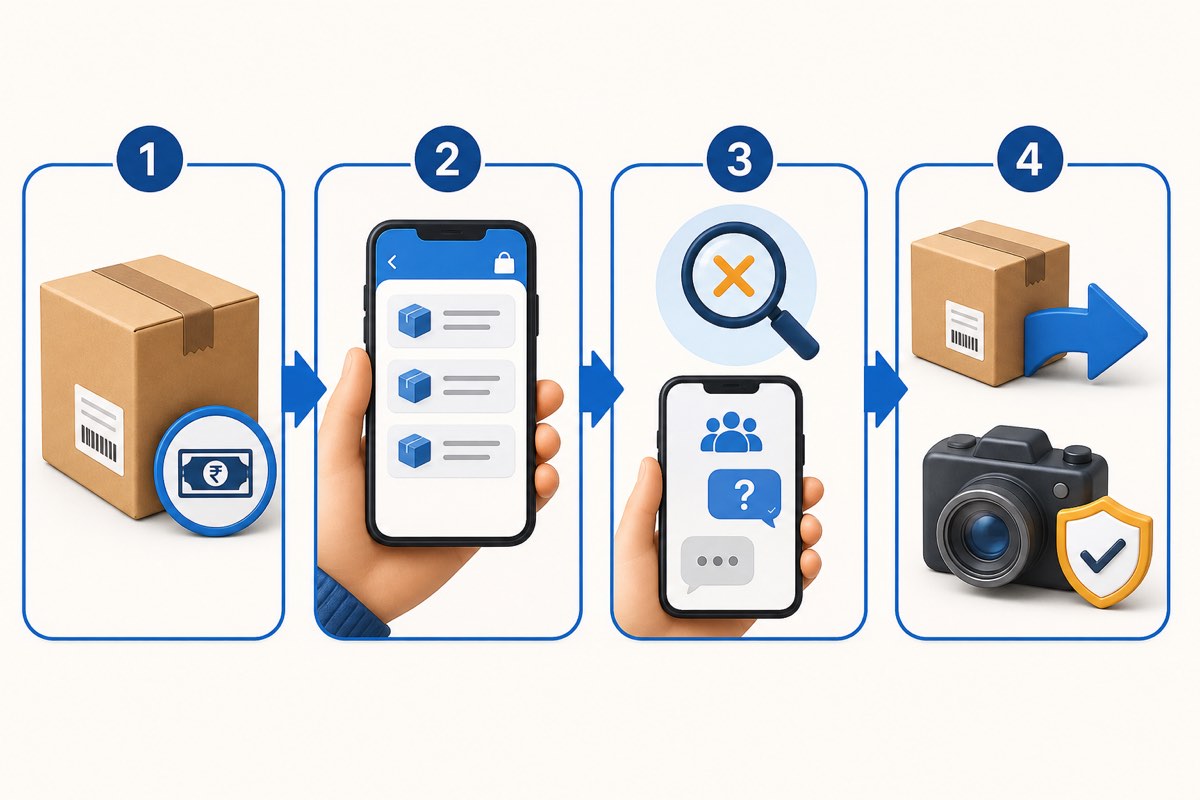
Verify the parcel in four steps
 CouponPe
Check the order in the official account, ask the household, then refuse and document a parcel that has no genuine match.
1. Ask who placed the order
Call or message people in your household before paying. Ask for the merchant name, product, amount and expected delivery date. A vague reply such as "maybe someone ordered it" is not confirmation. The person who placed it should be able to open the order in their own account.
2. Open the official order history yourself
Type the merchant address or open its installed app. Do not use a delivery link from an unexpected SMS or WhatsApp message. Look for an active order with the same order number, COD amount and delivery address. If the caller claims it is an Amazon cash-on-delivery order, verify it inside the Amazon account. CouponPe can help you reach current Amazon coupons and store details, Flipkart coupons and store details or Meesho coupons and store offers, but only the merchant account can confirm whether you placed that exact order.
3. Inspect the label without exposing your data
Note the courier, tracking number, sender shown, amount and recipient. Do not post an uncensored label online because it can reveal your address and phone number. A familiar courier uniform or a working tracking number does not prove that the underlying order is yours. COD is a legitimate delivery option, but it should still correspond to a real order.
4. Refuse an unmatched parcel calmly
Tell the delivery person that nobody placed the order and you are refusing delivery. You do not need to accuse the agent. Ask what the courier's official refusal or return process requires. If an OTP is requested, read the full message before sharing anything. The text should clearly describe the action. Never share a bank, UPI, login or payment OTP to cancel a parcel.
Quick decision table
| What you find | What to do | What not to assume |
|---|---|---|
| Exact order appears in the buyer's official account | Match product, amount and address, then follow the normal delivery process | The label alone is enough |
| Household member confirms a gift or COD order | Ask them to show the order and payable amount | A verbal guess is confirmation |
| No account shows the order | Refuse delivery and note the tracking details | Correct personal details make it genuine |
| Caller asks for a separate UPI payment or QR scan | Stop and verify through the courier or merchant's official support | A QR code is only for receiving money |
| Someone already paid | Preserve evidence, contact the payment provider and report promptly | Opening or discarding the parcel will help the claim |
If you already paid
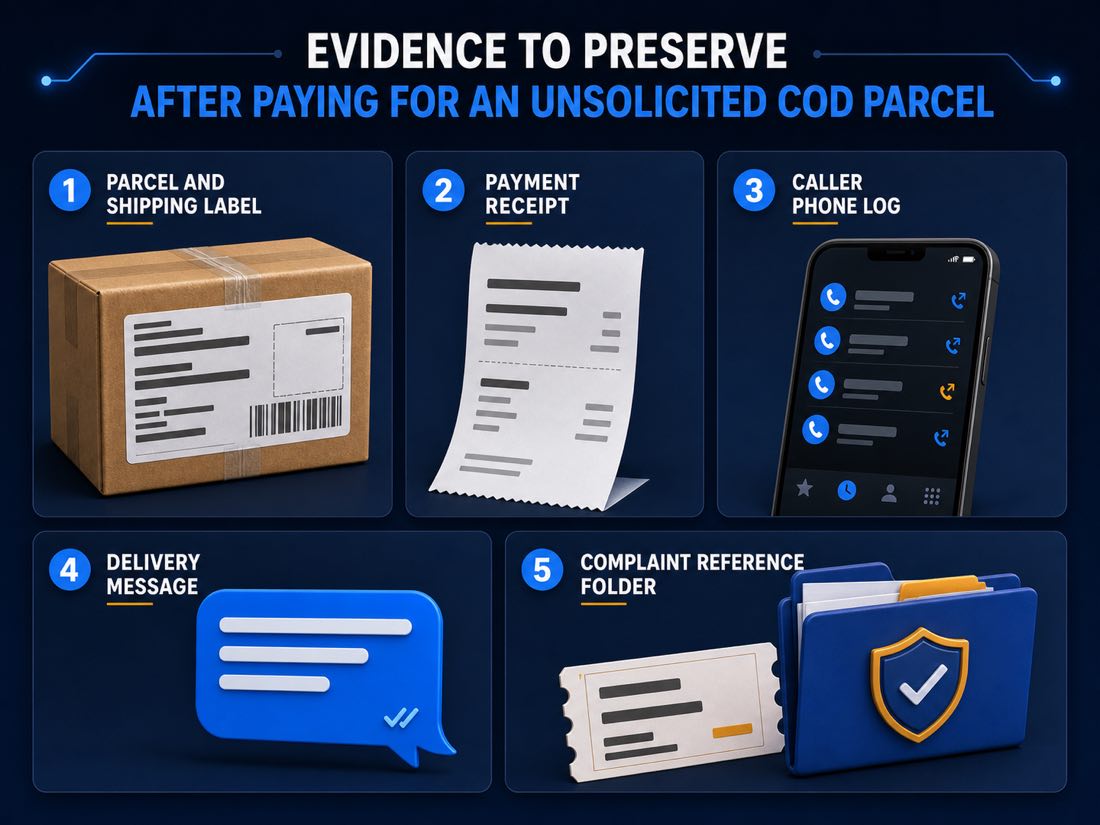
Do not throw away the parcel, outer packaging or label. Photograph every side, but hide personal data before sharing the images. Save the delivery message, caller number, tracking page, payment receipt, UPI transaction ID or bank reference, amount, date and time. Write down what happened while the sequence is fresh.
 CouponPe
Keep the parcel label, payment record, call log, delivery message and every complaint acknowledgement together.
Contact the bank, card issuer or UPI app through its official support route if the payment was digital. For online financial fraud, the National Cyber Crime Reporting Portal directs people to report immediately through cybercrime.gov.in or helpline 1930. Its complaint checklist asks for the incident date and time, bank or wallet or merchant name, transaction ID, amount and relevant evidence.
You can also raise a consumer grievance with the National Consumer Helpline. Its official portal lists online registration, WhatsApp and phone 1915, available from 8 am to 8 pm. If the delivery can be tied to a merchant account, also complain through that merchant's official help section and keep the ticket number.
Choose the complaint route by what actually happened. If the parcel travelled through India Post, its official COD rules say the sender must declare that the article fulfils a bona fide order. The rules also say that when an addressee complains immediately after receiving a COD article and there are initial grounds to suspect dishonesty or fraud, the Head of Circle may withhold payment to the sender while making enquiries. A refund may follow only if the authority is satisfied after inquiry, so it is not automatic. Keep the article, wrapper and receipt, and complain promptly.
If cash was handed over through another courier, complain to that courier and the named merchant first, then use the National Consumer Helpline when a service provider does not resolve it. If the loss involved UPI, card or another online payment, also contact the payment provider and report suspected financial cyber fraud through 1930 or cybercrime.gov.in. These routes address different parts of the problem.
If the issue is a genuine order that arrived damaged or wrong, use CouponPe's guide to choosing a return, replacement, refund or warranty route. If money was debited but no order was created, the failed-order UPI refund timeline is the more relevant process.
Reduce the risk at home
A simple household rule prevents many mistaken payments: the person ordering COD should tell the group the merchant, expected amount and delivery date. Do not leave an elderly relative, child, guard or house help to guess whether a parcel is real. If another person will receive it, share the order screenshot with personal and payment details hidden.
Keep merchant notifications inside the official app where possible. Be cautious when a caller creates urgency, insists that the parcel must be paid for before verification or asks for a payment outside the normal delivery flow. The same pause-and-check habit helps before purchase too: use the genuine online shopping website checklist for unfamiliar stores and the dark-pattern checkout guide when the cart or consent flow feels manipulative.
When comparing fashion purchases, current Myntra coupons and store details can help you reach the canonical merchant route, but keep the order confirmation in the merchant account until delivery is complete. A coupon listing cannot authenticate a parcel at your door.
How this COD guide was checked
CouponPe rechecked India Post's parcel, COD and complaint guidance, the National Cyber Crime Reporting Portal and the National Consumer Helpline on 21 July 2026. We compared the official routes with the reported unsolicited-parcel pattern. We did not order or accept a test parcel, contact a courier about an individual case or test a refund claim. Courier procedures, evidence needs and outcomes can vary, and only the relevant provider or authority can decide a complaint.
Refuse an order you cannot verify
An unexpected COD parcel is not a debt. Verify the exact order before handing over cash, approving UPI or sharing any code. Refuse a parcel that nobody ordered, preserve its details without exposing your address, and report quickly if money has already changed hands. Calm verification protects both the household and a legitimate delivery person who may not know what is inside the package.
How this guide was prepared
CouponPe separates editorial explanation from merchant claims, records visible update dates, and lists the supplied sources below. Offer eligibility and final prices should always be confirmed on the merchant website or app.
Sources
- The New Indian Express: Kerala Police warning on unsolicited COD parcelsAccessed
- India Post: Cash-on-delivery rules and fraud complaint processAccessed
- National Cyber Crime Reporting Portal: Complaint evidence checklistAccessed
- National Cyber Crime Reporting Portal: Report suspect and 1930 guidanceAccessed
- National Consumer Helpline: Official grievance channelsAccessed