

Direct answer
At a glance
A practical India-focused method for checking an unfamiliar shopping website, seller identity, GST details, policies and payment route before placing an order.
- Article type
- how-to
- Last updated
- 22 July 2026 at 12:22 pm IST
- Sources listed
- 6
Verify the seller before trusting the offer
Do not judge an online shop by a polished homepage or a padlock symbol alone. Before paying, verify the exact web address, who is selling the product, how the seller can be contacted, what happens if the order goes wrong and where the payment is going.
HTTPS means the connection is encrypted. It does not confirm that the business, product or offer is genuine. A fake store can also use HTTPS, copied product photos and a convincing checkout page.
A genuine-looking page is only the start. Trust comes from details that agree across the website, payment screen, invoice and independent sources.
A seven-point check before you place the order
| Check | What to look for | Reason to pause |
|---|---|---|
| Web address | Correct spelling, expected domain and no strange extra words | A link opens a lookalike or unrelated domain |
| Seller identity | Business or seller name, address and working contact route | Only a social-media message or personal number is available |
| Product and price | Specific description, model, condition and believable price | Huge discount with vague product details or copied images |
| Policies | Clear delivery, cancellation, return, refund and warranty terms | Important terms appear only after payment |
| Payment | Merchant name and amount match the order | Payment is requested to an unrelated personal account or collect request |
| Reviews | Recent, detailed feedback across more than one source | Repetitive praise, no useful detail or reviews only on the seller's page |
| Support | Grievance or customer-care route you can save | No address, ticket system or written acknowledgement |
India's Consumer Protection (E-Commerce) Rules require specified information to be displayed by e-commerce entities and marketplace sellers. This includes important return, refund, payment, grievance and seller details. The rules do not turn every displayed detail into proof, but missing or contradictory information is a useful reason to stop.
 CouponPe
1. Open the site independently
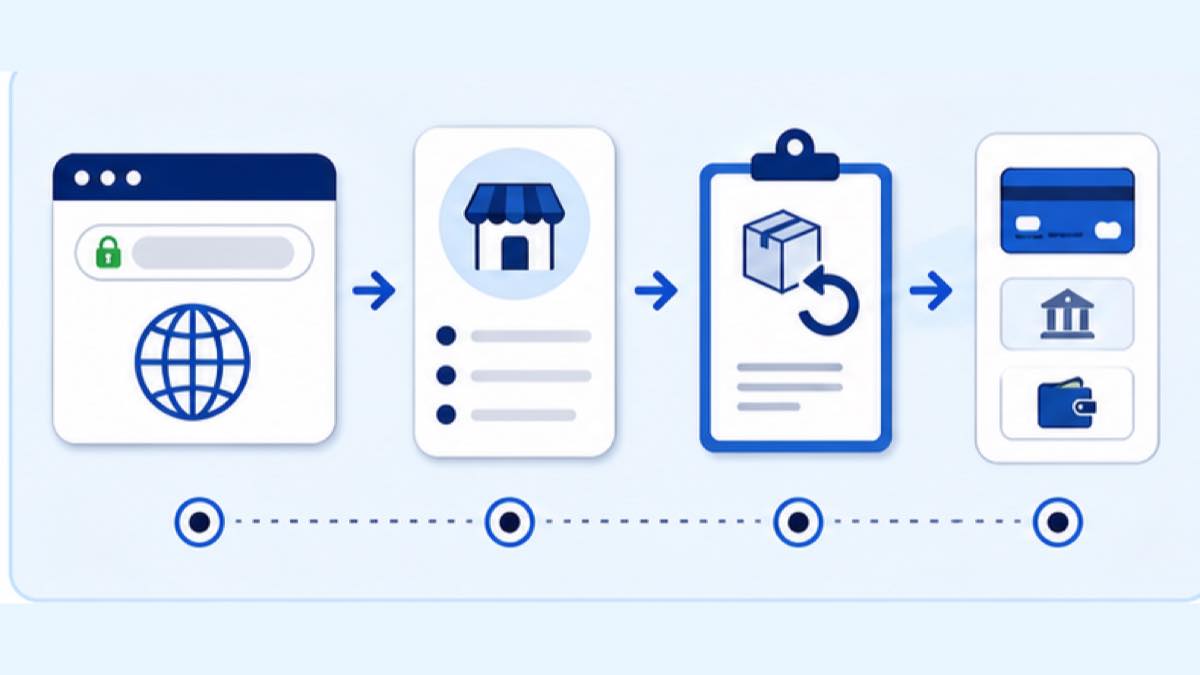
If the offer arrived through an SMS, messaging app, social post or advertisement, do not begin with the supplied payment link. Search for the business independently, compare the domain with its verified profile or official app listing, and type the address yourself when possible.
The National Cyber Crime Reporting Portal advises users not to click suspicious links or attachments from unknown senders. Such links can lead to counterfeit pages or malware that collects credentials and payment information. Treat a minor spelling change, extra hyphen or unusual domain ending as a reason to investigate, not a harmless design choice.
A padlock is still worth checking because you should not send sensitive information over an unencrypted page. Just remember that encryption protects data in transit; it does not certify the seller.
2. Identify the actual seller
On a marketplace, the platform name and seller name may be different. Record both. Check the seller's address, contact route, product description, country of origin where applicable, and grievance details shown before purchase. For an independent store, look for a consistent business name across the contact page, terms, payment screen and invoice information.
If the store displays a GSTIN, use the GST Portal's public Search Taxpayer tool. It can show the legal name, trade name, registration status, principal place of business and cancellation date without login. Match those details with the seller name, address and invoice promise on the website.
Do not treat a matching GSTIN, logo or office photo as conclusive by itself. A real registration can be copied onto an unrelated page, and not every small seller will be required to have a GST registration. Use the result only as one cross-check. A mismatch, cancelled status or refusal to explain the invoicing entity is a reason to pause.
When shopping through familiar marketplaces, open the current product and seller terms after comparing Amazon coupon options or Flipkart coupon options. For fashion purchases, the same rule applies after checking Myntra coupons or AJIO coupons. CouponPe helps with offer discovery; it does not verify every third-party seller or product listing.
3. Test the offer against reality
Compare the exact model, size, condition and total price with the brand's official page and at least one established seller. A low price is not automatically fraudulent, but an exceptional discount needs a clear explanation such as an older model, open-box condition or documented sale.
Read the final payable amount, delivery charge and optional add-ons. CouponPe's final-price comparison guide explains how to compare a sale price, coupon and bank offer without changing the original cart. If a timer, hidden add-on or late charge is pushing the decision, use the dark-pattern checkout checklist before proceeding.
Use a simple TRACE record before a high-value first order:
- T - Type the domain independently: do not rely on the advertisement or message link.
- R - Reconcile identities: match the website, seller, GST record when supplied and payment recipient.
- A - Archive the claim: save the listing, final price, delivery promise and return policy with the date.
- C - Compare outside the store: check the exact product and price on the brand page or another established seller.
- E - Exit on conflict: do not pay merely to see whether a doubtful seller is genuine.
This creates a repeatable decision trail. It is stronger than relying on one review score or one registration number, but it cannot guarantee fulfilment or product authenticity.
4. Read the remedy before you need it
Find the cancellation, return, replacement, refund and warranty terms before paying. Check the time window, excluded categories, return shipping, condition requirements and who provides warranty service. Save the policy with the listing because the page can change later.
A vague promise such as easy returns is less useful than a written process. CouponPe's return, refund and warranty guide can help you match the remedy to the problem and preserve the right evidence.
5. Check the payment request carefully
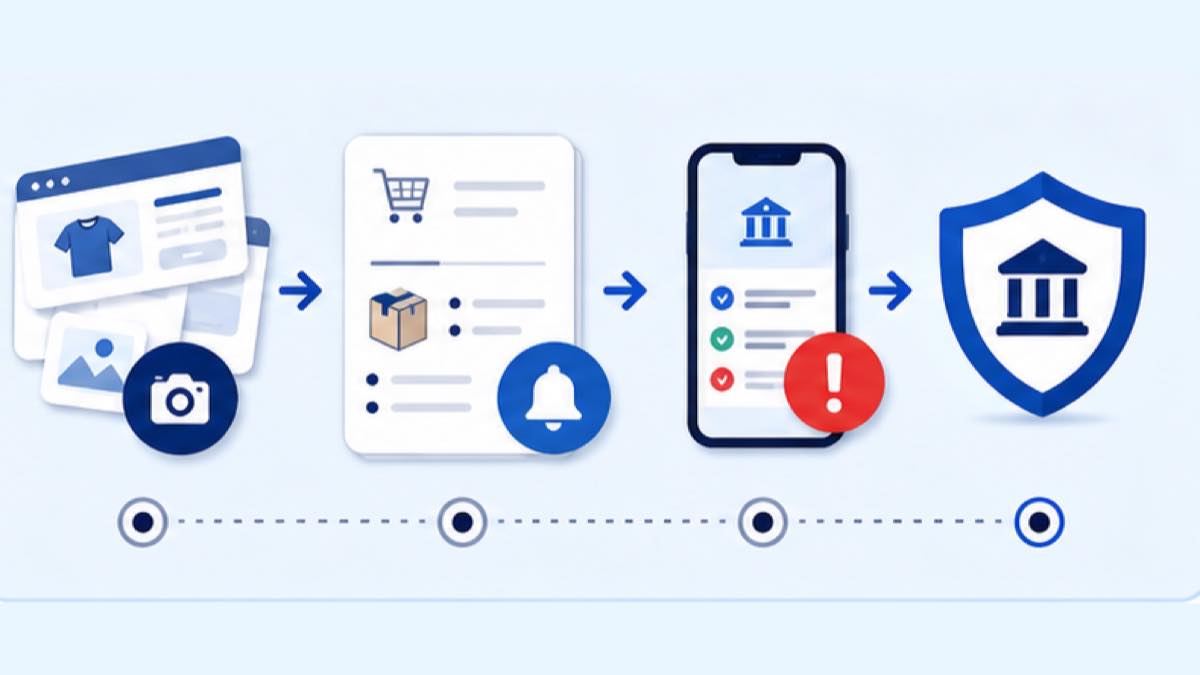
Confirm the merchant name and amount on the final bank, card or UPI screen. Do not share an OTP, PIN, password or screen-control access. NPCI explains that a UPI PIN authorises a bank transaction and should not be shared with anyone. A PIN is not required merely to receive money.
Be especially cautious if a store moves the conversation away from its checkout and asks for payment to an unrelated personal UPI ID or bank account. A different payment route is not proof of fraud, but the mismatch needs a clear, verifiable explanation before you authorise it.
The National Cyber Crime Reporting Portal also advises using your own device and a trusted network for shopping or banking. Avoid completing sensitive payments on a public computer, cyber cafe or free public Wi-Fi.
 CouponPe
If you have already paid a suspicious store
Act quickly and keep the evidence intact. Save the web address, listing, chat, seller details, order confirmation, payment reference, bank alert and any invoice. Do not continue a conversation that asks for another payment to release a refund.
- Contact your bank or payment provider immediately through its official channel and report the transaction.
- Report online financial fraud promptly on 1930 and use the official National Cyber Crime Reporting Portal at cybercrime.gov.in.
- Contact the store or platform through a verified grievance route and keep the ticket number.
- For an unresolved consumer dispute, use the official National Consumer Helpline portal or 1915 and keep the unique docket number. NCH is a pre-litigation route and does not guarantee a remedy.
- If the payment was debited but the order merely failed, follow the separate UPI failed-order refund timeline so a technical reversal is not confused with suspected fraud.
If an unrecognised parcel reaches your door without any matching order, use the unexpected cash-on-delivery parcel checklist before anyone at home pays or shares an OTP.
How this website-check guide was verified
CouponPe rechecked the official Consumer Protection rules index, GST Search Taxpayer manual, National Consumer Helpline and National Cyber Crime Reporting Portal on 22 July 2026. The TRACE method is CouponPe original analysis built from those public checks.
CouponPe did not place a test order, submit payment, contact a listed seller, validate a specific GSTIN, file a complaint or measure a refund outcome for this update. The checklist reduces avoidable uncertainty; it does not certify a merchant, product, review, GST registration or payment account.
The practical decision rule
Proceed only when the domain, seller, product, policy and payment request tell the same story. If one important element cannot be verified, leave the cart and investigate from a separate trusted source. Missing a discount is inconvenient. Sending money or personal details to an unverified store is harder to undo.
How this guide was prepared
CouponPe separates editorial explanation from merchant claims, records visible update dates, and lists the supplied sources below. Offer eligibility and final prices should always be confirmed on the merchant website or app.
Sources
- Department of Consumer Affairs: Consumer Protection rules and amendmentsAccessed
- GST Portal: Search Taxpayer manualAccessed
- National Consumer Helpline: complaint routes and limitationsAccessed
- National Cyber Crime Reporting Portal: Online safety tipsAccessed
- National Cyber Crime Reporting Portal: reporting portal and suspect checksAccessed
- NPCI: UPI frequently asked questionsAccessed