

Direct answer
At a glance
Understand how No Cost EMI works in India, calculate processing fees and GST, compare cash discounts, and decide whether to finance or wait.
- Article type
- guide
- Last updated
- 22 July 2026 at 1:22 pm IST
- Sources listed
- 3
No Cost EMI can still have an extra cost
No Cost EMI usually means the merchant offsets the bank interest through an upfront discount or later cashback. It does not automatically remove processing fees, GST on interest or fees, late-payment charges, or the cash discount you give up. Compare the cash price with every rupee that will leave your account during the EMI tenure.
RBI's credit-card directions require issuers to show the principal, interest and merchant-provided upfront discount before conversion. They also say an interest-bearing EMI must not be disguised as zero-interest or No Cost EMI. The bank may still charge interest while the merchant provides an equal benefit separately.
No Cost EMI is available only for selected products, cards and tenures. Check the exact offer at checkout and on the bank confirmation, even when the product page carries a large EMI label.
How the offer normally works
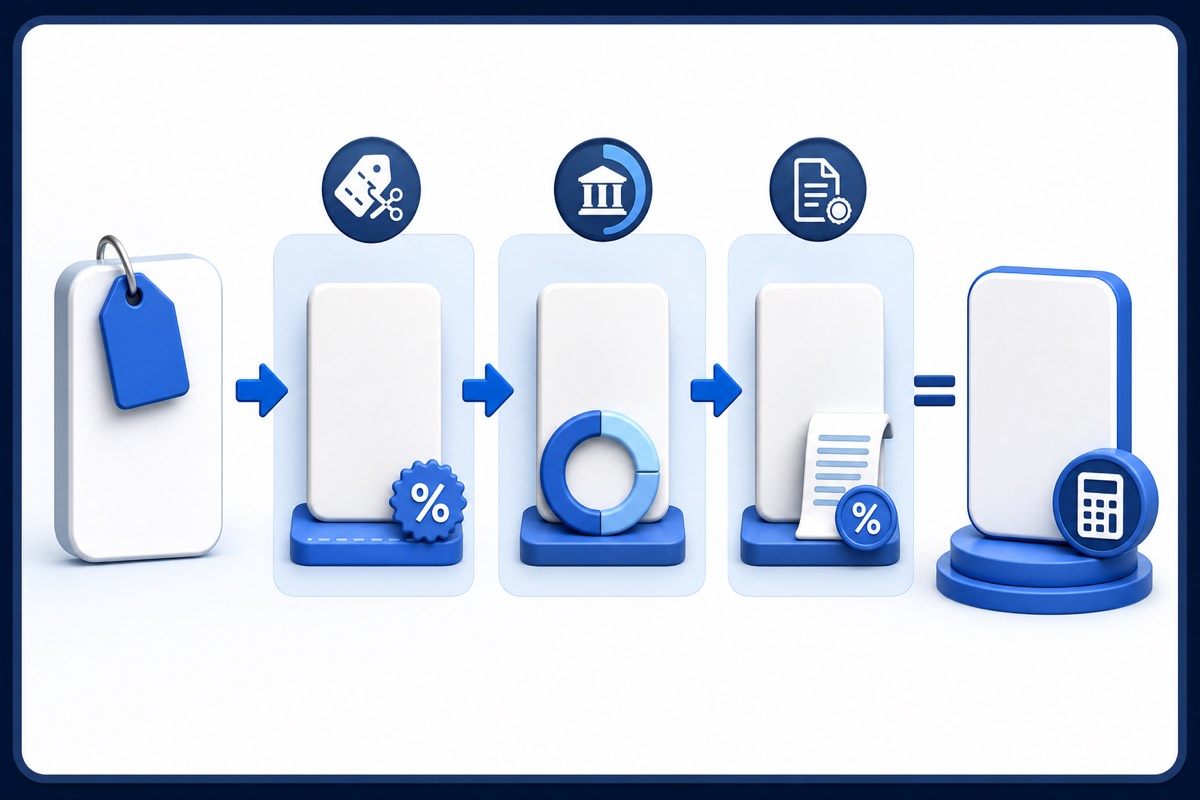
Suppose a phone's cash selling price is ₹30,000. The bank's interest across a selected tenure is ₹1,500. In one common structure, the merchant gives an upfront discount of ₹1,500, so the financed principal becomes ₹28,500. The bank then bills ₹28,500 principal plus ₹1,500 interest across the tenure. Those two components total ₹30,000 before other charges.
That is why the card statement may show interest even though checkout said No Cost EMI. The merchant discount neutralises the stated interest; it does not make the underlying loan interest-free.
Another offer can return the interest as cashback later. ICICI Bank's debit-card EMI terms say the bank continues to charge interest and other charges while the merchant provides the No Cost EMI benefit as cashback. The terms say merchant cashback can take up to 90 days. Do not treat a later benefit as received until its amount, eligibility and credit timeline are clear.
 CouponPe
Read the calculation from product price to final paid total. The visual is conceptual; use the actual checkout and bank figures for your purchase.
Use one real-cost calculation
Write down five values before payment:
- Cash price: the lowest final price for paying without EMI, including any non-EMI instant discount.
- EMI principal: the amount the bank will convert after the merchant's upfront discount, if any.
- Total interest: the complete interest shown for the selected tenure.
- Fees and tax: processing fee, GST on that fee and GST applied to interest where the terms require it.
- Confirmed cashback: subtract it only when the offer states the amount and your transaction qualifies.
Use this formula:
EMI effective cost = principal + total interest + processing fee + applicable GST - confirmed cashback
Then calculate:
Extra cost of EMI = EMI effective cost - cash price
For a reproducible example, keep the ₹30,000 cash price and ₹1,500 merchant discount above. Assume a ₹199 processing fee and 18% GST on that fee, which is ₹35.82. If the merchant discount exactly offsets the ₹1,500 interest and no other tax applies, the EMI outflow becomes ₹30,234.82. The effective extra cost is ₹234.82, not zero.
This is an illustration, not a current bank quote. Rates, tax treatment, fee structure and offer mechanics vary. Replace every example value with the checkout disclosure and amortisation schedule shown for your transaction.
Compare three checkout paths, not one EMI label
CouponPe's CASH-EMI-WAIT worksheet is a labelled original-analysis check. Record the final non-EMI cart, the final EMI outflow and the price you would accept after waiting. For example, assume the same item is ₹29,200 after a cash-only discount, ₹30,234.82 through the EMI calculation above, or ₹27,500 only if a future sale actually reaches your target. The EMI costs ₹1,034.82 more than paying now. Waiting has a potential ₹1,700 saving against today's cash cart, but no guaranteed outcome.
Keep the comparison honest: use the same model, seller, delivery, protection plan and return terms. Do not count a speculative future discount as money saved, and do not value cash flow as free. This worksheet separates a verified checkout cost from a personal wait target; it is not a forecast of a sale price.
A smaller EMI is not a lower price
A longer tenure reduces the monthly instalment but keeps your credit limit tied up for longer. SBI Card's current Merchant EMI terms say a processing fee applies and is reversed on Merchant EMI cancellation, but not on foreclosure. Your issuer's cancellation and foreclosure rules may differ.
The monthly amount also hides opportunity cost. A card may offer a larger instant discount on a non-EMI payment, reward points may be excluded on EMI transactions, or a merchant coupon may disappear when you switch payment mode. Compare the same product, seller, delivery address and protection plan in both checkout versions.
CouponPe's sale, coupon and bank-offer final-price guide explains how to compare those layers without adding an unwanted product. For a marketplace purchase, check current Amazon coupons and store offers and Flipkart coupons and store offers, but treat the merchant checkout and issuer disclosure as the final evidence.
Pay now, use EMI or wait?
 CouponPe
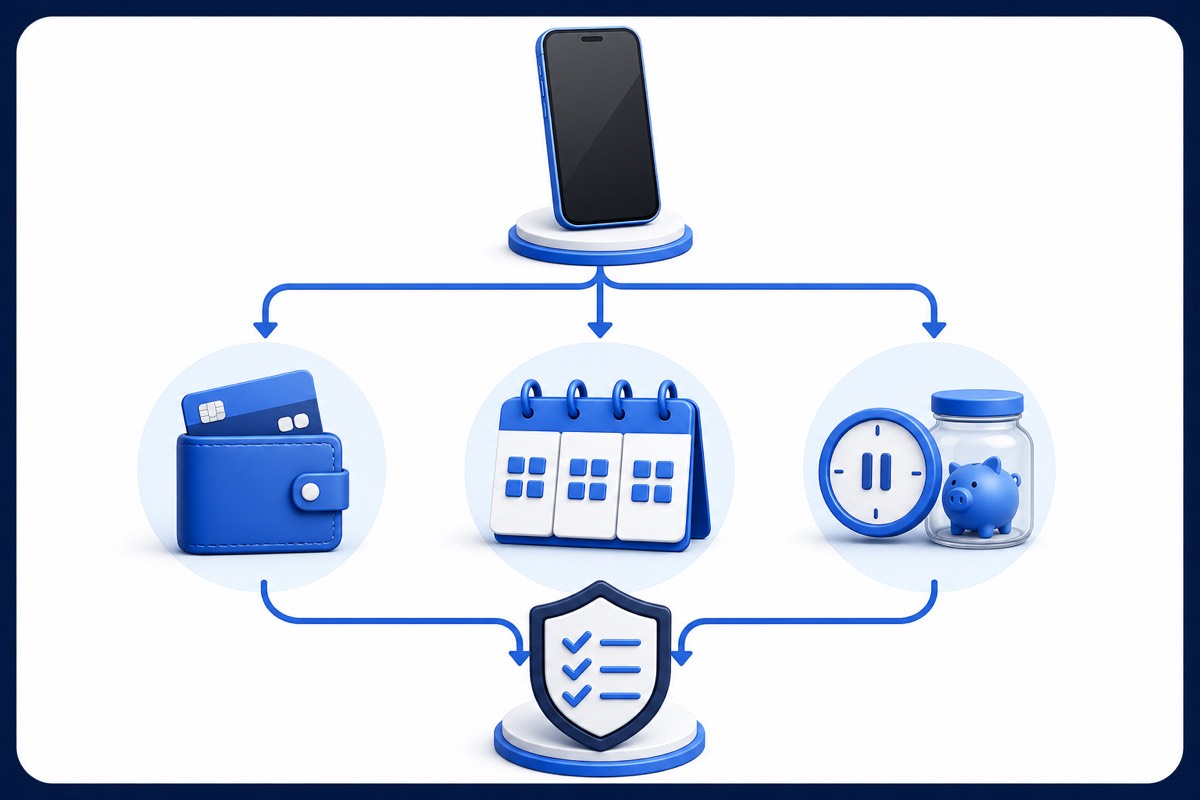
No route is automatically best. Choose after checking the full cost and your ability to pay every instalment on time.
Pay now when the cash price is lower, the purchase will not weaken your emergency buffer, and the card bill can be paid in full by its due date. A large non-EMI discount can beat a nominal No Cost EMI offer.
Use No Cost EMI when the purchase is necessary now, the effective extra cost is acceptable, every instalment fits your existing budget, and you can keep enough credit limit available. Save the offer screen, fee disclosure and amortisation schedule.
Wait to buy when the product is optional, the EMI makes an expensive model feel artificially affordable, or one missed payment would create finance charges and late fees. Waiting is also reasonable when you need revolving credit to pay the EMI. No promotional structure makes an unaffordable purchase safe. If an old-phone quote is part of the affordability decision, calculate the real mobile exchange upgrade cost separately before choosing the tenure.
For high-value electronics, compare identical configurations rather than labels. CouponPe's Apple Education Pricing guide uses the same completed-cart discipline. If you are buying a streaming device mainly for entertainment, first check whether the Amazon Prime plans comparison or Netflix plans guide changes what equipment you actually need.
Check these terms before authorising
- Is the benefit an upfront discount or later cashback?
- Which product, seller, card variant and tenure qualify?
- What principal, annual interest rate and total interest are disclosed?
- Is there a processing fee, and what GST applies to fees or interest?
- Does EMI remove a coupon, instant discount, cashback or reward points?
- How much credit limit will remain blocked?
- What happens after cancellation, return or foreclosure?
- When is the first instalment billed, and what happens after a missed due date?
A refund does not always close the EMI immediately. Keep paying according to the issuer's statement until the merchant cancellation and bank reversal are confirmed. If payment is debited but the order is not created, use the failed-order and UPI refund evidence guide rather than assuming the EMI has disappeared.
The real verdict on No Cost EMI
No Cost EMI can be useful cash-flow management when the merchant benefit truly offsets interest and the remaining fees are small. It is not proof that financing and paying now cost the same. Use the effective-cost formula, compare the non-EMI cart, and choose the purchase only if both the total and every monthly instalment fit your budget.
Method and limitations
CouponPe reviewed RBI's credit-card disclosure rule and current official ICICI Bank and SBI Card EMI terms accessed again on 22 July 2026. The worked example uses labelled hypothetical values only to demonstrate arithmetic. We did not apply for an EMI, test an individual card or inspect a reader's checkout. Product eligibility, rates, taxes, fees, credit limits, cashback timing and cancellation rules remain account- and offer-specific.
How this guide was prepared
CouponPe separates editorial explanation from merchant claims, records visible update dates, and lists the supplied sources below. Offer eligibility and final prices should always be confirmed on the merchant website or app.